The quality of an electronic shelf label starts with its display module. How sharp the text is, how true the red and yellow look, whether the label still refreshes in a freezer and how many years it lasts are decided mainly inside the e-paper module — by the ink film, the backplane, the driver chip and the waveform — not by the housing around it. That is why our Classic, Lite, Slim and Rock labels use modules from only two of China’s leading e-paper module makers, both built on E Ink electronic-ink film, and why every main size is dual-sourced. (The Swift series, an OEM-labelled product we distribute, uses its own maker’s module supply.)
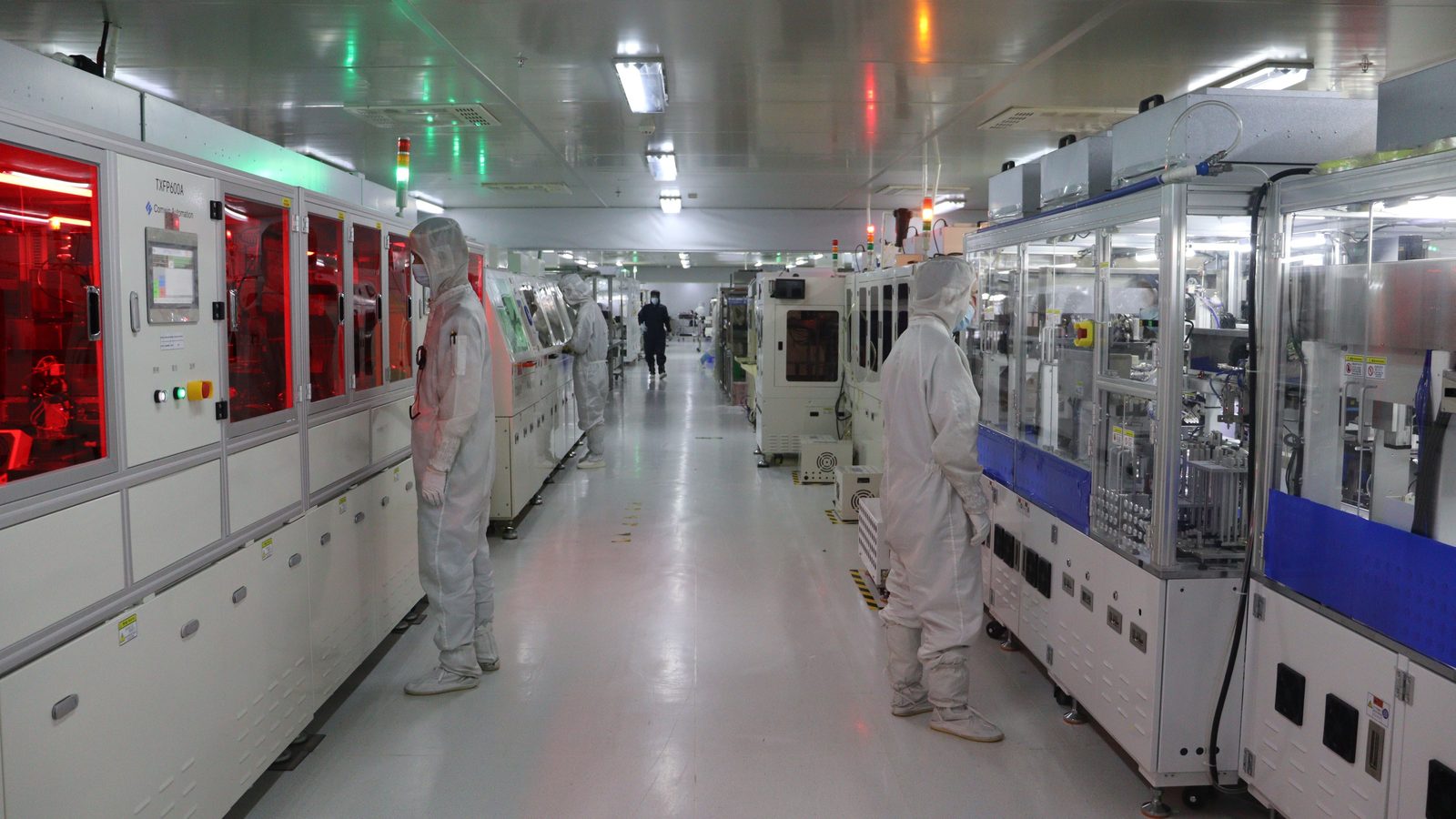
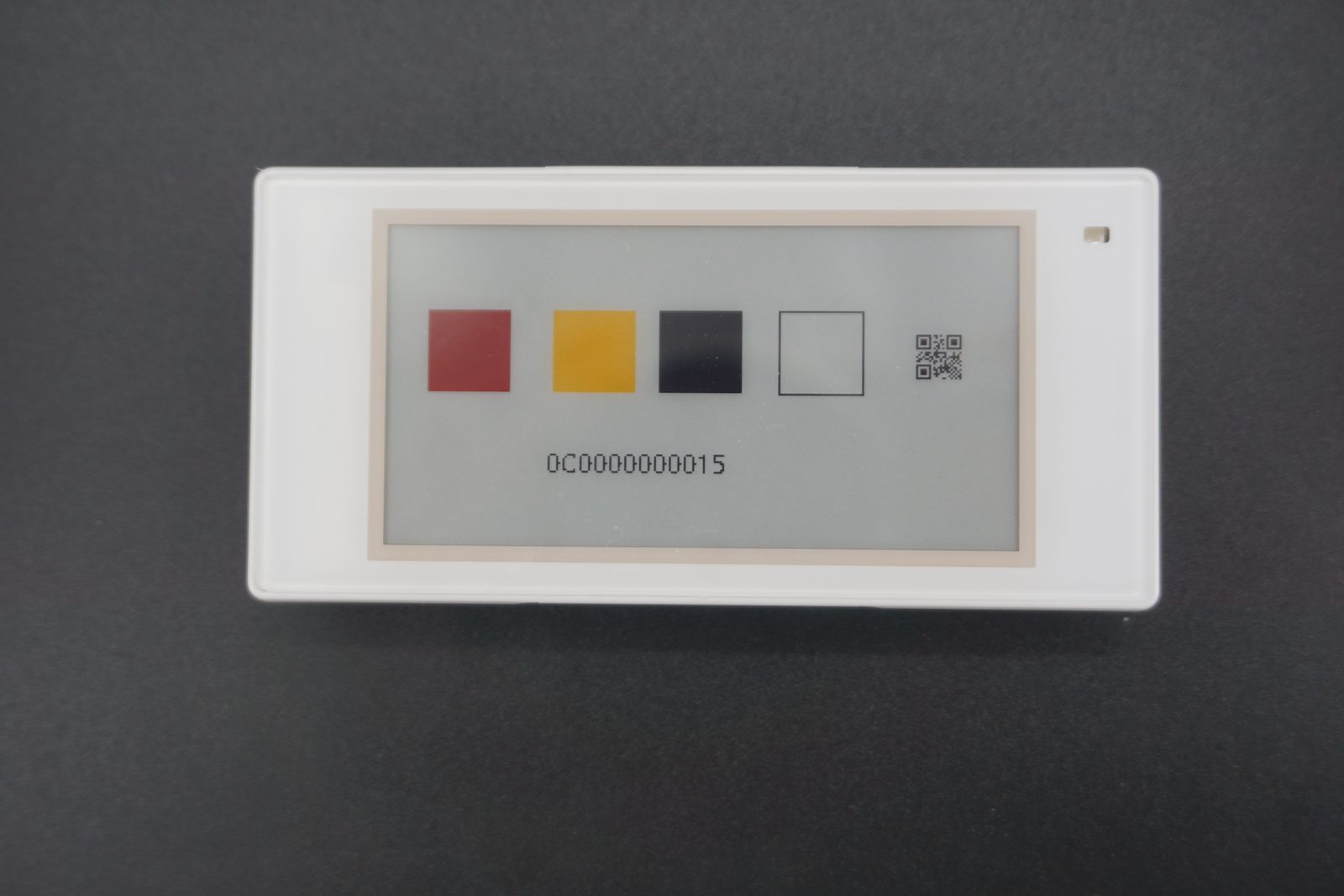
A module production line at one of our module makers, and a four-colour label from our range.
What is inside an e-paper display module
An e-paper display module is the complete display unit that goes into a label: everything except the radio board, the battery and the housing. Each layer affects what the shopper sees.
| Layer | What it does | What it decides in a label |
|---|
| Electronic-ink film | Millions of microcups or microcapsules holding charged black, white and coloured pigment particles | Contrast, colour saturation, viewing angle, temperature range |
| TFT backplane | A thin-film transistor array that applies a voltage to each pixel | Resolution, sharpness of small text and barcodes, uniformity |
| Driver chip | Converts image data into the voltages for each pixel | Refresh behaviour, power use, support for partial refresh |
| Flexible circuit (FPC) | Connects the panel to the label’s board | Mechanical reliability during assembly and in use |
| Waveform | The voltage sequence that moves the particles, tuned per temperature | Colour accuracy, ghosting, refresh time, low-temperature performance |
Two labels can look identical on a specification sheet and still behave very differently on the shelf. The difference is usually the module: a well-tuned waveform gives clean reds and yellows without ghosting, and a good backplane keeps small text and barcodes crisp. These are things a label maker cannot fix afterwards, which is why we choose the module first.
Colour types at a glance
All modules from our two module makers use E Ink electronic-ink film. Typical figures from our module makers’ datasheets:
| Type | Colours | Full refresh | Operating temperature | Best for |
|---|
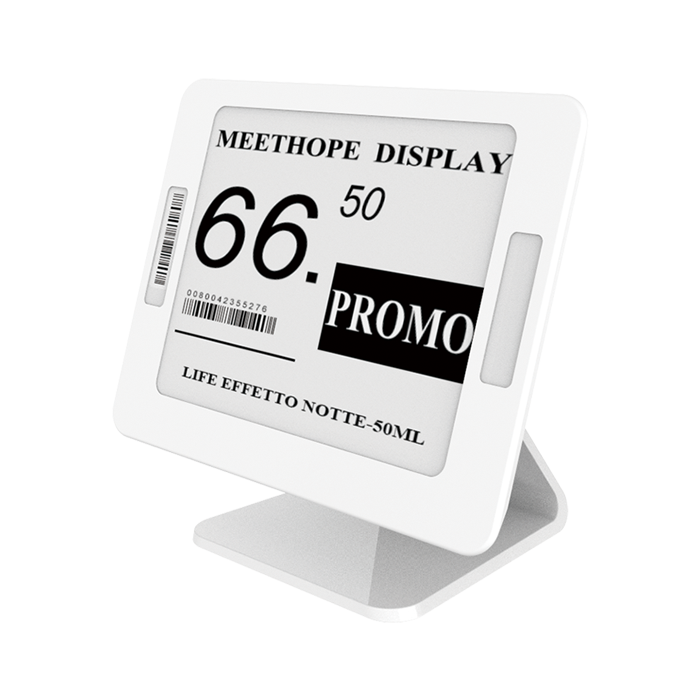
| Black and white | Black, white | About 3 s; partial refresh supported | 0 to 50 °C | Frequent price changes, fastest updates |
| Black and white, freezer | Black, white | Longer at low temperature | From −25 °C | Frozen-food cabinets, cold rooms |
| Three-colour | Black, white, red | About 20 s | 0 to 40 °C | Promotions highlighted in red |
| Four-colour | Black, white, red, yellow | About 20 s | 0 to 40 °C | Promotions and member prices in red or yellow |
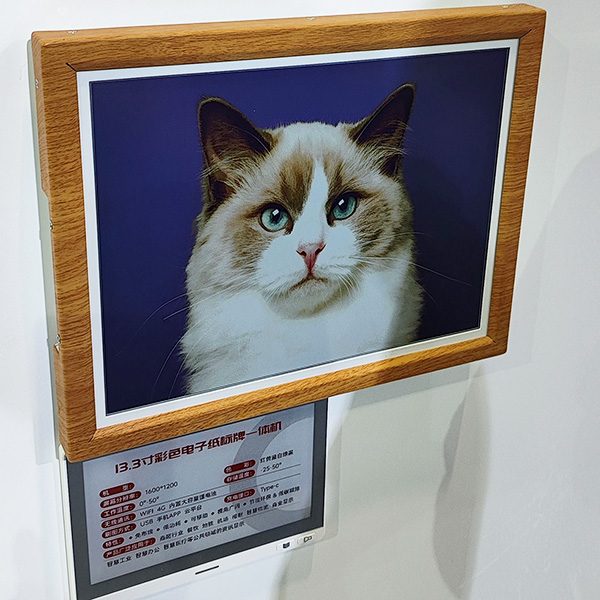
| Full colour | Black, white, red, yellow, green, blue | About 20 s | 0 to 50 °C | Large signage, images and branding |
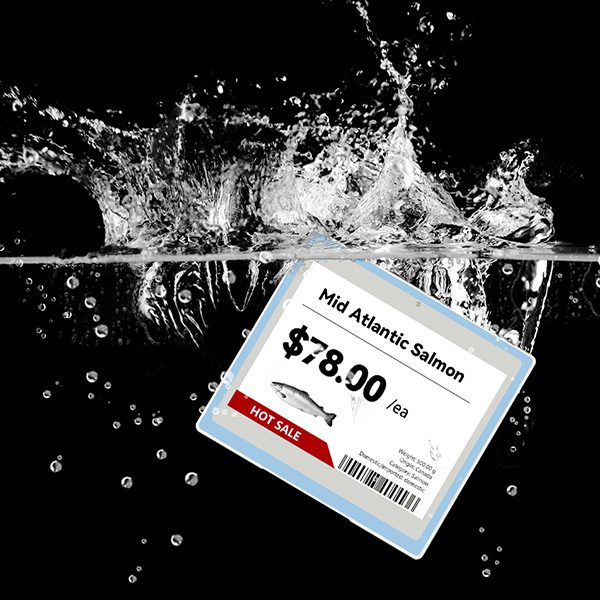
Four-colour e-paper keeps its colours readable from a wide angle and needs no power to hold the image.
Colour labels refresh more slowly than black-and-white ones because the coloured particles need a longer drive sequence. For most stores that is not a limitation: prices change a few times a day, and the update runs in the background.
Freezer, large-format and full-colour modules
- Freezer modules use a low-temperature ink and waveform so the label still refreshes in frozen-food cabinets. Our freezer labels are rated from −25 to +30 °C; see freezer labels.
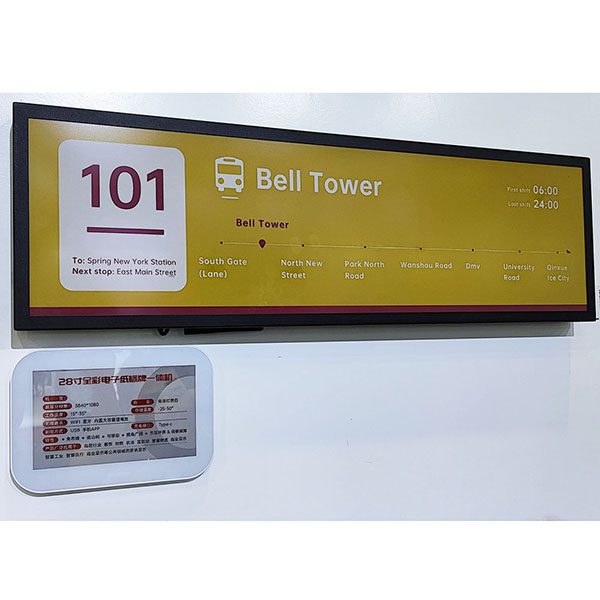
- Large-format modules from 7.5" to 13.3" and above are used for aisle signs, promotion boards and door signs; see e-paper display signage.
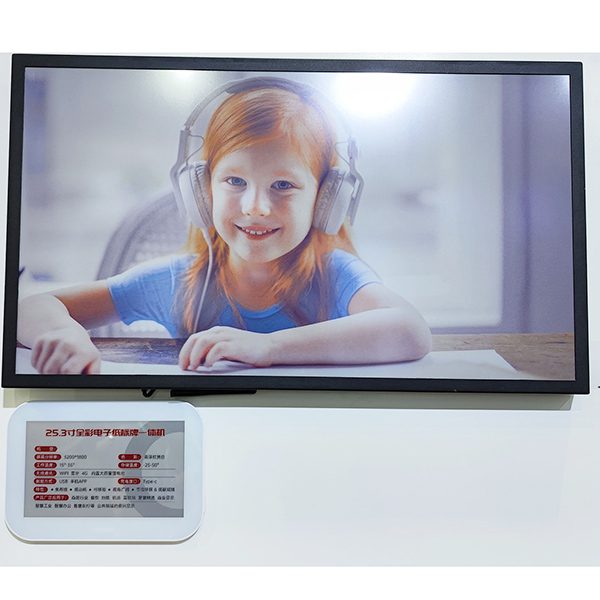
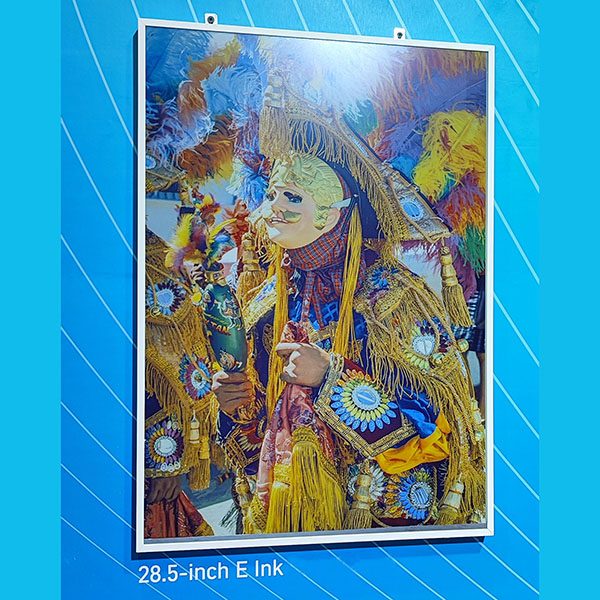
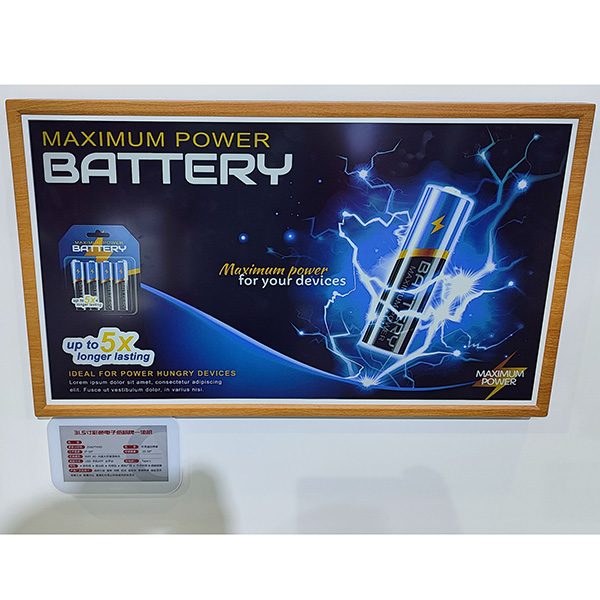
- Full-colour modules (13.3" to 31.5") show images and brand colours on signage without any backlight.
Our two module makers
We buy display modules from two specialised e-paper module manufacturers. Both are part of publicly listed groups, both build on E Ink electronic-ink film, and both cover the label sizes of our own series. The figures below come from their own published materials.
| Module maker in Jiangxi | Module maker in Dalian and Zhejiang |
|---|
| Founded | 2015 | 2005 |
| People | About 1,050 employees, 183 in R&D | About 1,600 employees; three R&D centres |
| Production | Annual shipments grew to about 44 million modules | 4 production bases, 23 production lines, about 11.7 million modules a month |
| Range | 1" to 42": black and white, three-colour, four-colour, colour, flexible and fully laminated modules | 0.97" to 31.5": black and white (standard and freezer), three-colour, four-colour, full colour, flexible and segment displays |
| Technology | Own TFT backplane and driver-chip definitions, in-house waveform team; 107 patents | Dedicated waveform tuning team; 88 granted patents |
| Certifications | ISO 9001, ISO 14001, ISO 45001, QC 080000; national green factory; national single-product manufacturing champion | ISO 9001, IATF 16949 (automotive quality) |
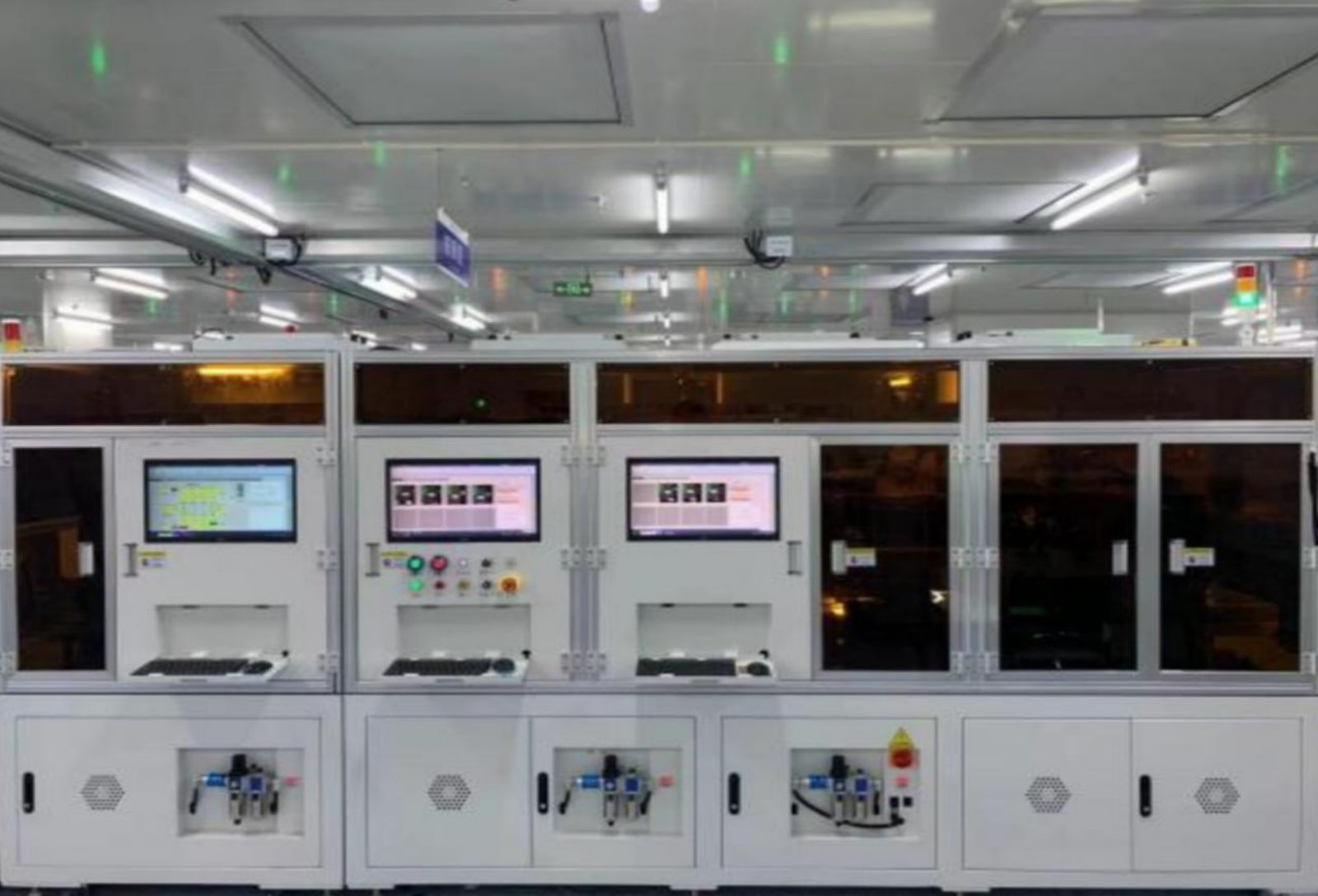
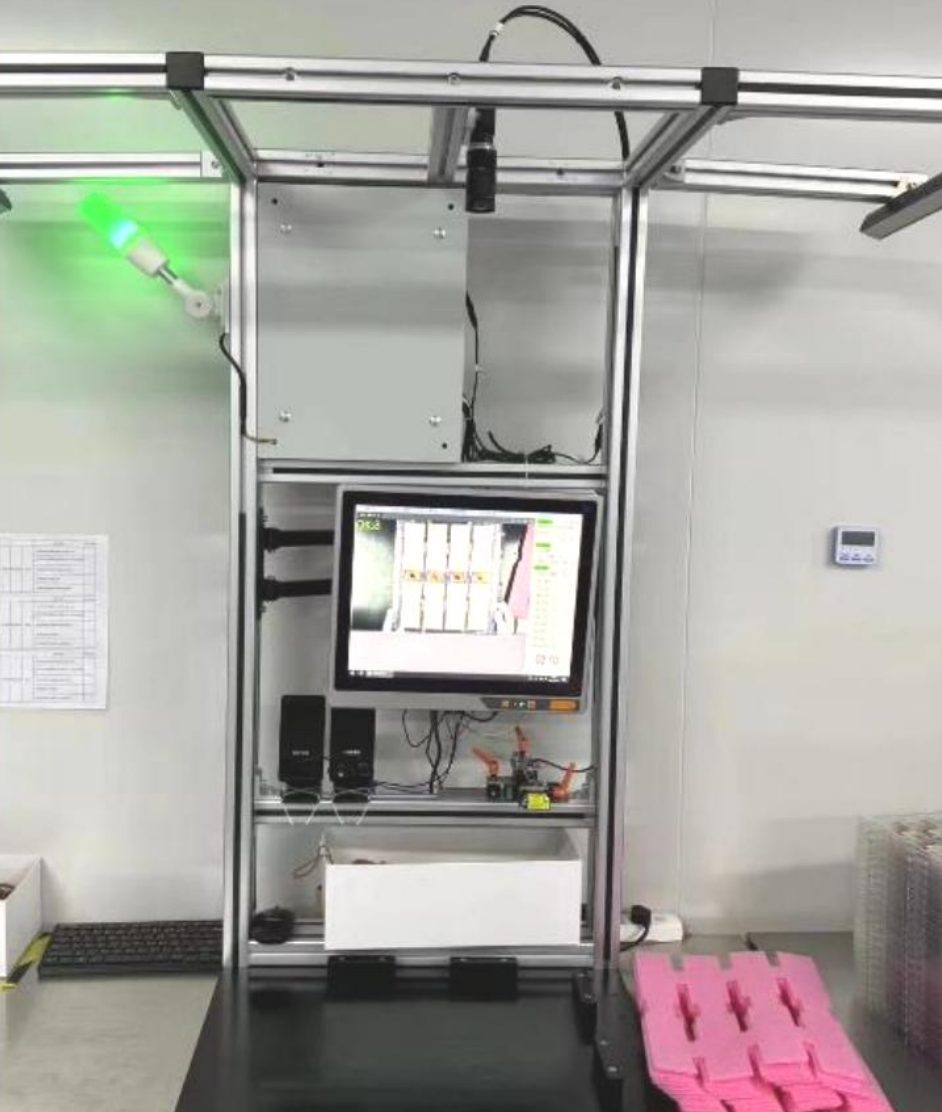
Automated optical inspection, camera checks at packing and a cleanroom line at our module makers.
Why we dual-source every module
- Supply security. Each of our main label sizes is qualified with both module makers, so if one has a shortage or a long lead time, the other can supply.
- Capacity. Between them the two makers produce well over 10 million modules a month, so module supply is never the bottleneck for a large order.
- Consistent quality. A module is only approved when it passes the same checks on our label, whichever maker it comes from.
- Access to new technology. Both makers develop new colour, low-temperature and large-format modules, which we evaluate as they reach production.
How we check display modules
Modules are checked at four points before and after they go into a label:
| Check | What we look for |
|---|
| Incoming sampling | Each module delivery is sampled for appearance, dimensions, connector condition and labelling against the datasheet. |
| Power-on on the label | The module is driven on a finished label: full refresh, colour test patterns, small text and barcodes, partial refresh where supported. |
| Low-temperature test | Labels are refreshed at low temperature, and freezer models in freezer conditions, to confirm the waveform works across the rated range. |
| Ageing | Sampled labels run repeated refresh cycles over time to catch early failures, ghosting or colour drift. |
These checks sit alongside the line tests described on testing and quality; the label assembly itself is described on SMT and assembly and partner factories.
FAQ
Do your labels use E Ink displays?
Yes. The display modules in our Classic, Lite, Slim and Rock labels are made by two specialised module makers and use E Ink electronic-ink film.
What is the difference between three-colour and four-colour labels?
Three-colour labels show black, white and red; four-colour labels add yellow. Both refresh in about 20 seconds and work from 0 to 40 °C; four-colour gives you a second highlight colour for promotions or member prices.
How cold can a freezer label work?
Our freezer labels are rated from −25 to +30 °C. They use a low-temperature module and waveform designed for frozen-food cabinets.
How long does an e-paper display last?
The display itself typically lasts longer than the battery: our module makers rate standard black-and-white modules for 7 to 10 years and colour modules for 5 to 7 years of normal use. Battery life is listed on each product page.
Can we specify the module or colour type?
Yes. Tell us the size, colour type and temperature range you need; for projects with special requirements we can recommend a module and test it on a sample label first.
Comparing displays? Ask for samples in black and white, three-colour and four-colour and see the difference on your own shelf — or start with an
ESL demo kit.