Pharmacies and healthcare facilities use electronic shelf labels to keep thousands of small, similar-looking products correctly priced and identified — on retail shelves, in dispensary drawers and in medicine storage. Labels update from the pharmacy system, show product name, strength and price clearly, and remove the manual relabelling that leads to errors. This page covers chain pharmacies, traditional Chinese-medicine dispensaries, hospital pharmacies and clinics, with examples from projects in China.
Why pharmacies move to electronic shelf labels
A pharmacy shelf is dense: many small packs, several strengths of the same product, near-identical packaging and frequent price changes from suppliers and promotions. Paper tags in this environment drift out of date quickly, and the consequences are more serious than in a grocery store. A shopper who sees the wrong price loses trust; a staff member who picks from the wrong position because a tag was moved can hand over the wrong product.
Electronic shelf labels address both. Prices on the shelf come from the same data as the till, so they stay identical. Each position can show the full product name with strength and pack size, a barcode for scanning, and notes such as “pharmacist advice” or “limited stock”. And when products are moved during a planogram reset, labels are rebound in the system rather than reprinted.
- Price accuracy between shelf and checkout, across every branch.
- Clear identification of strength, pack size and form on each position.
- Fast promotions for seasonal products such as cold and flu remedies.
- Less staff time on relabelling, more time with patients and customers.
- Clean, professional shelves without handwritten notes or stickers.
About the examples below: these projects were delivered between 2021 and 2023 by our founder Panda Wang and members of our team, before the AiEInkSmart brand launched in 2024. Customer names are withheld.
Retail and chain pharmacies
Example: chain pharmacy, China
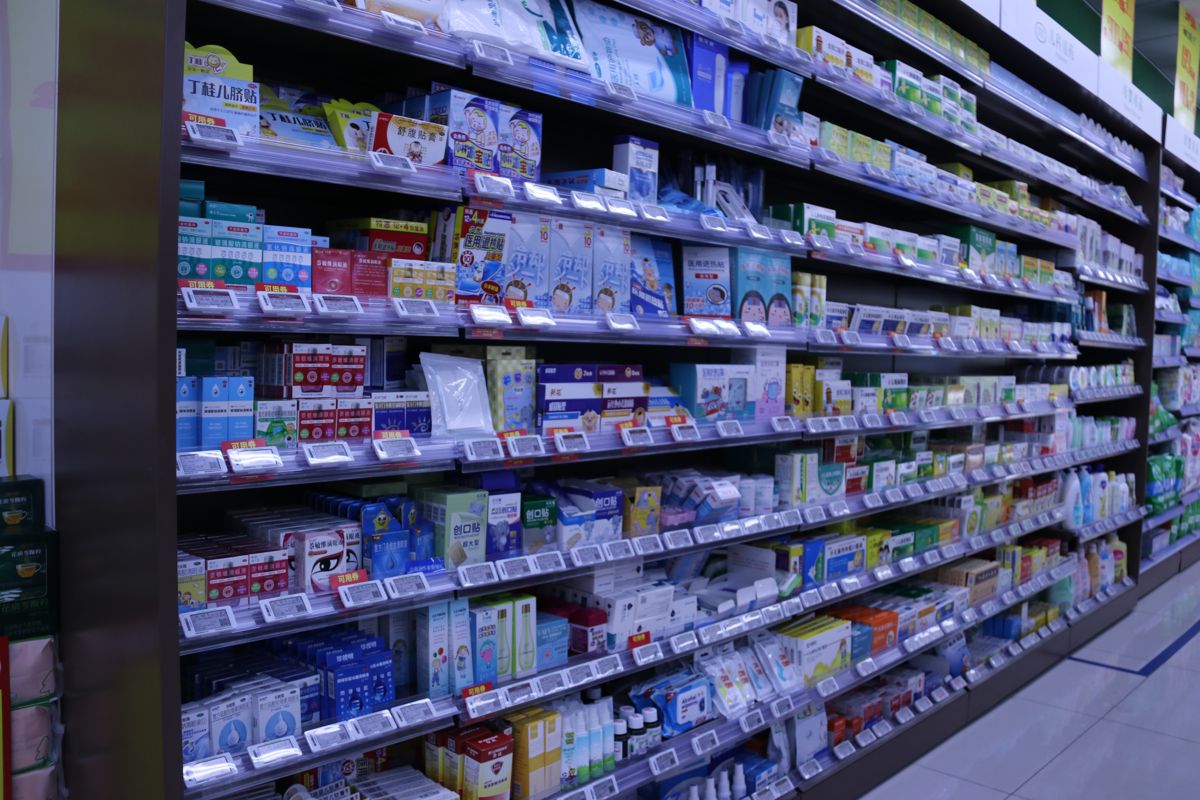
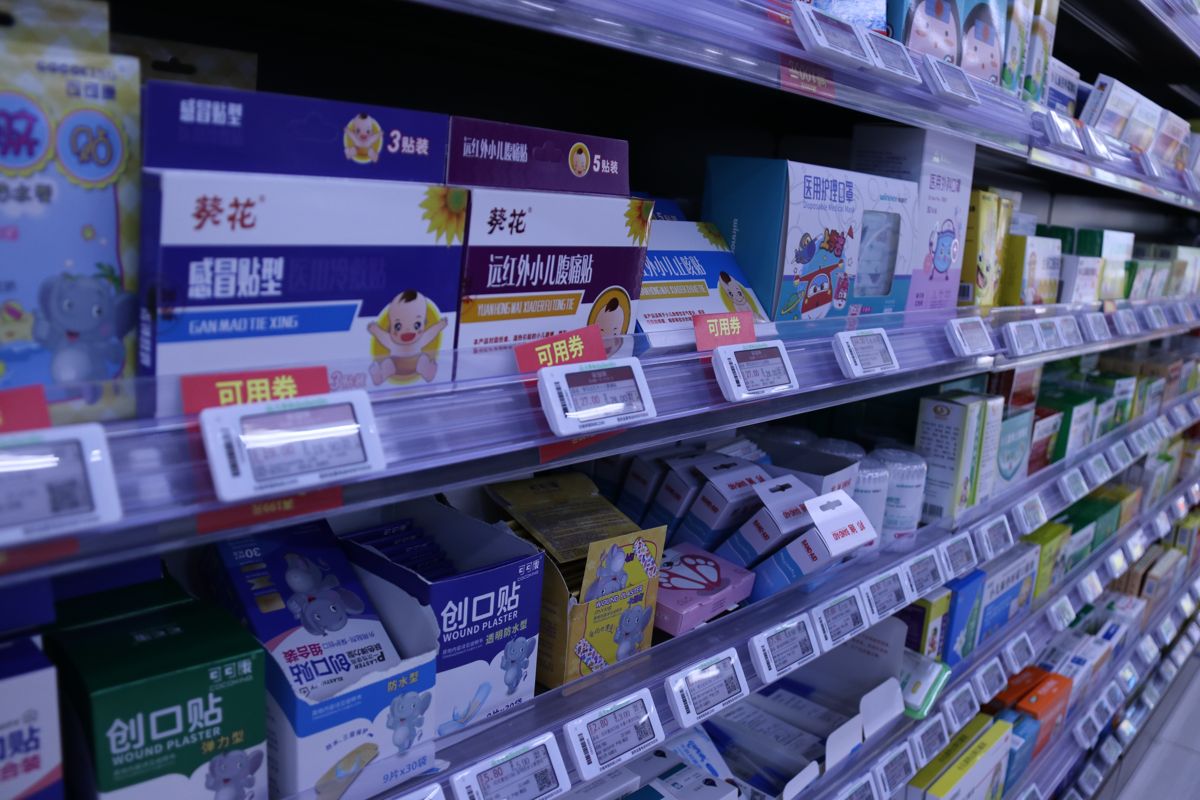
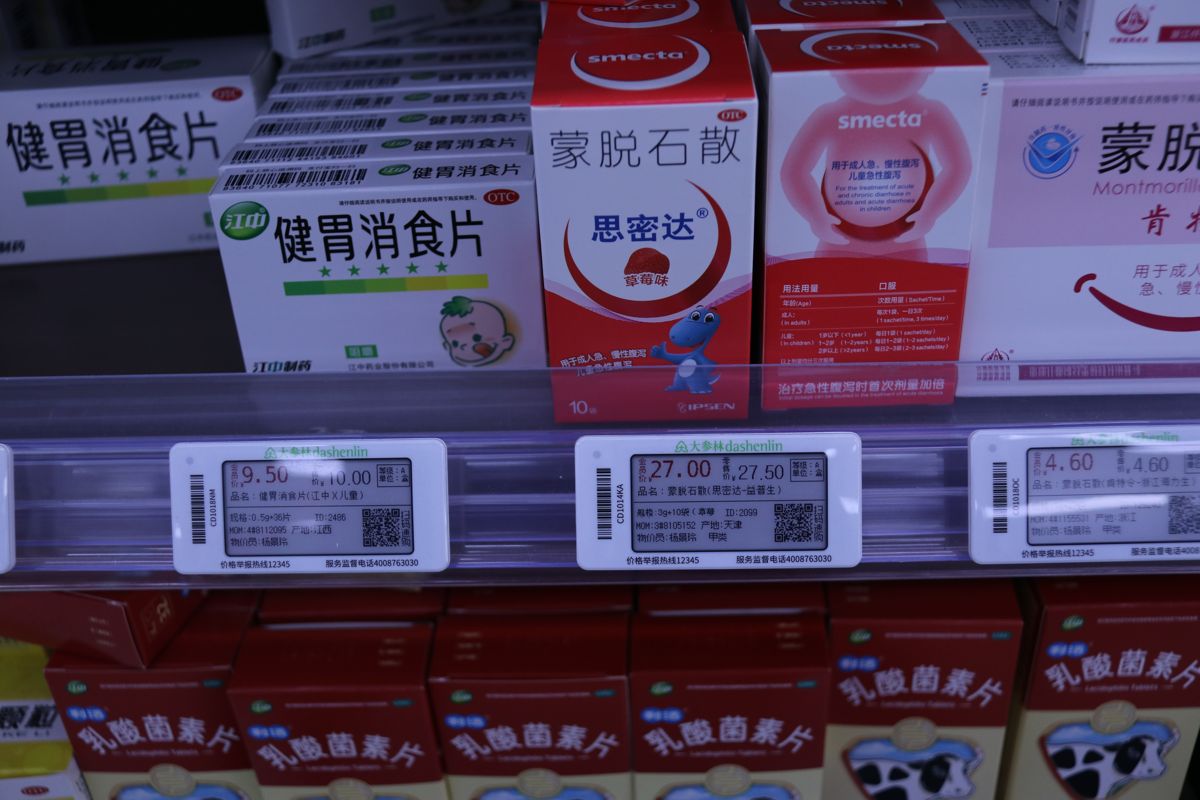
A pharmacy chain installed electronic labels along the gondolas in its stores: over-the-counter medicines, vitamins and supplements, baby care and personal-care products. Each label on the shelf rail shows the product name, specification and price under the matching facings, and promotional positions use the label to highlight the offer. With hundreds of similar boxes per aisle, a dedicated label per position makes it easier for both customers and staff to find the right product.
Pharmacy gondolas with one electronic label per product position.
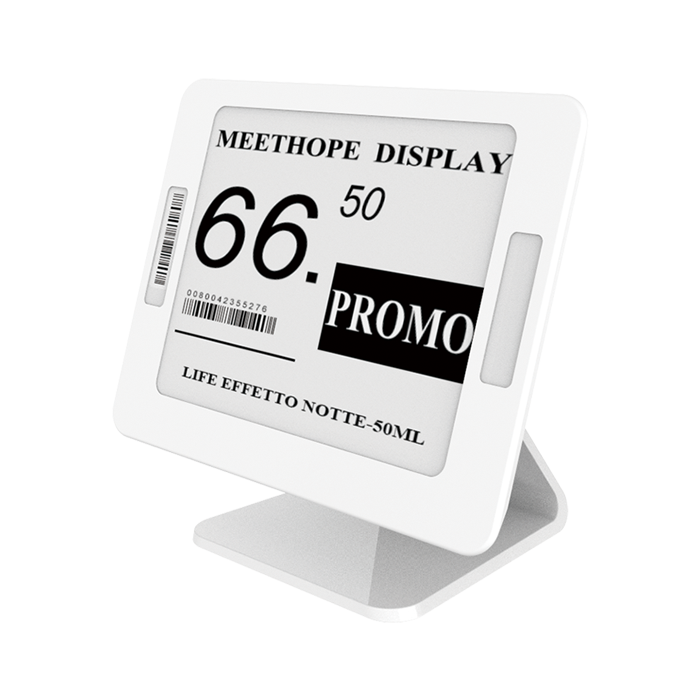
What works in pharmacies: 2.13" labels on standard shelf rails; the 1.54" size for small items such as cosmetics, plasters or vitamins on narrow shelves; the 11.2 mm Slim series where the store wants a cleaner look in beauty and personal-care areas; and four-colour labels for clearly marked promotions.
Traditional Chinese-medicine dispensaries
Example: Chinese-medicine dispensary, China
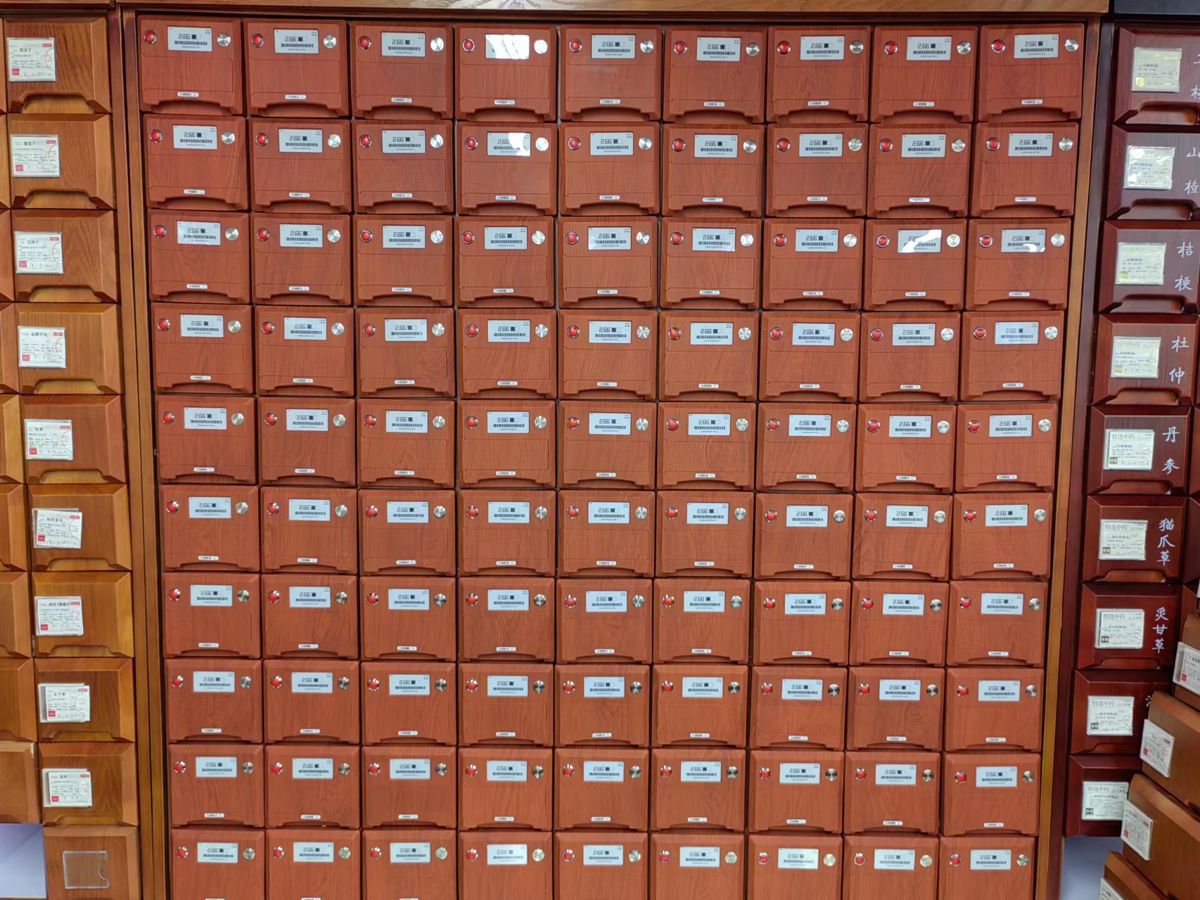
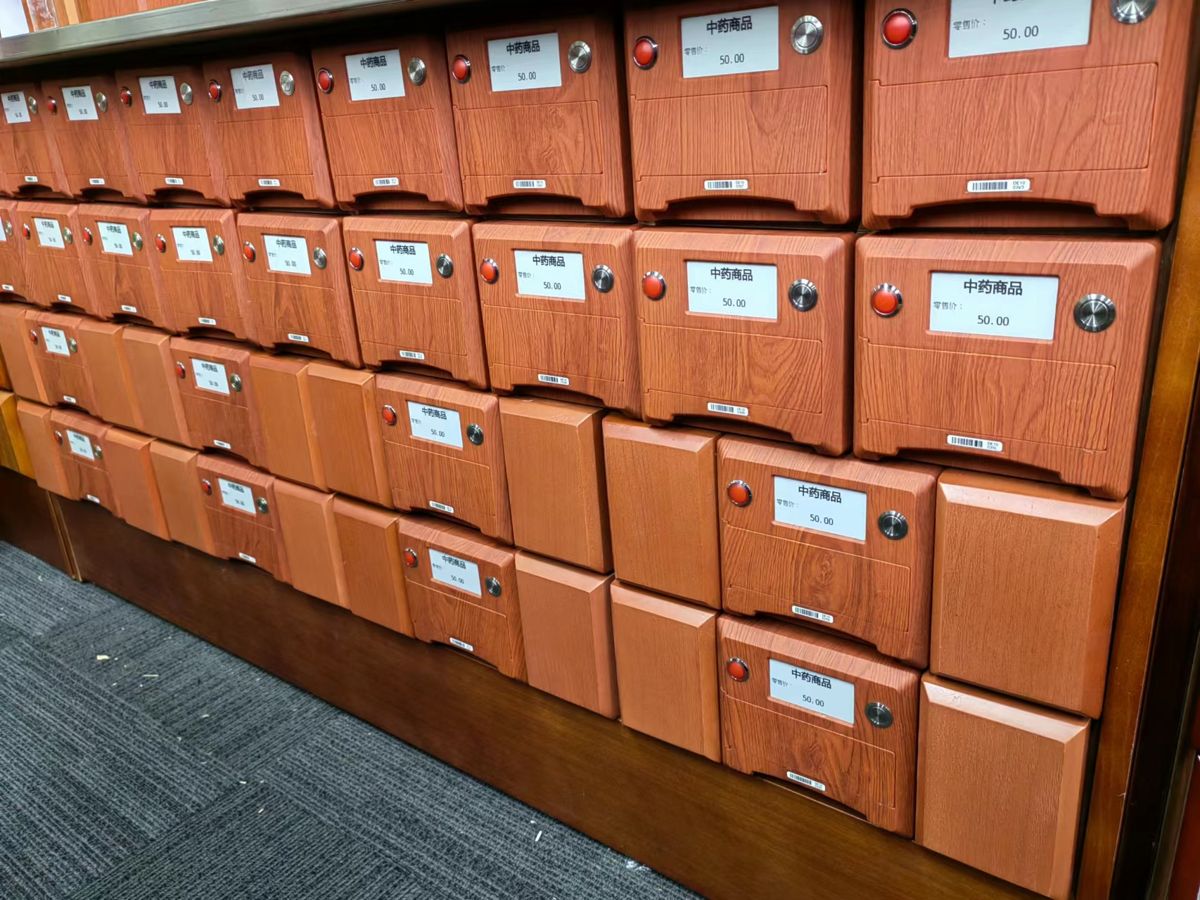
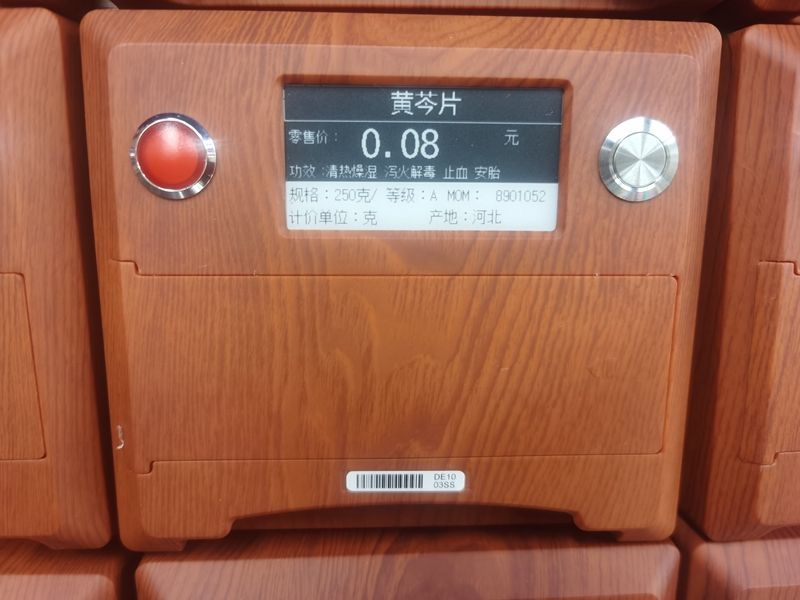
A traditional Chinese-medicine (TCM) dispensary stores hundreds of dried herbs in a wall of wooden drawers behind the counter. Every drawer front carries an electronic label showing the herb’s name and its price per gram, in place of handwritten cards or paper slips. When herb prices change — which happens often with natural products — the price can be updated in the system and the drawer labels follow.
For a dispensary, the label must be readable from the counter, sit flush with the drawer front, and identify the herb unambiguously, because many herbs have similar names. A barcode on each label also lets staff scan the drawer when restocking.
Herb drawer wall with one e-paper label per drawer.
The same idea applies to any drawer-based storage: dental and medical supplies, veterinary pharmacies and laboratory consumables. Labels with an indicator LED (available on the Classic series) can also flash on command to help staff locate a drawer; ask us how this fits your workflow and integration.
Hospitals, clinics and care homes
Inside a hospital the use cases are less about price and more about location and information:
- Hospital pharmacy and medicine stores — location labels on shelving and drawers, showing the medicine, strength and storage location, updated from the inventory system. This works the same way as warehouse bin labels.
- Medical supply rooms — labels on bins of consumables, with item codes and reorder notes.
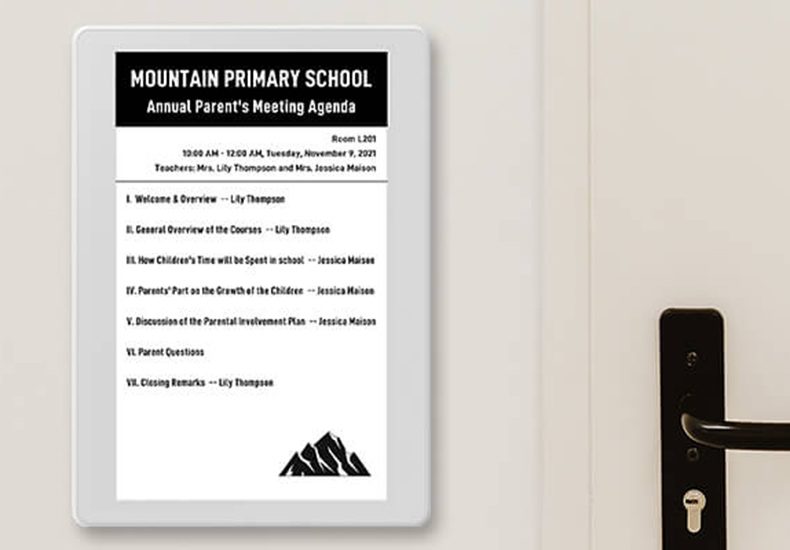
- Room and department signs — 7.5" e-paper door signs for consultation rooms, meeting rooms and offices, showing the room’s schedule or the doctor on duty.
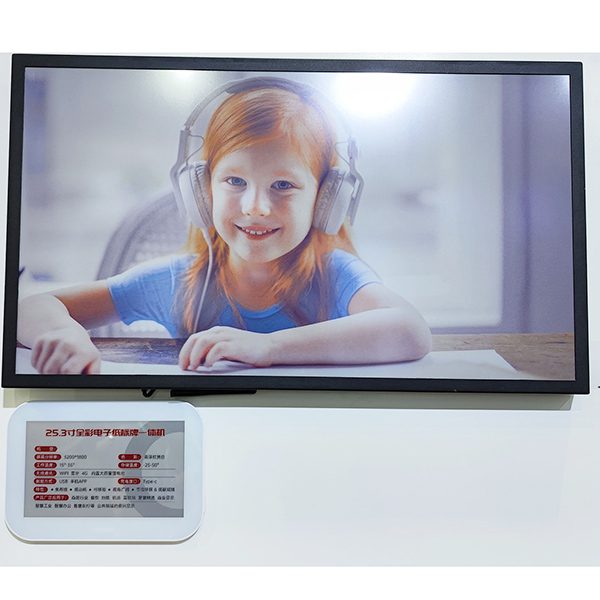
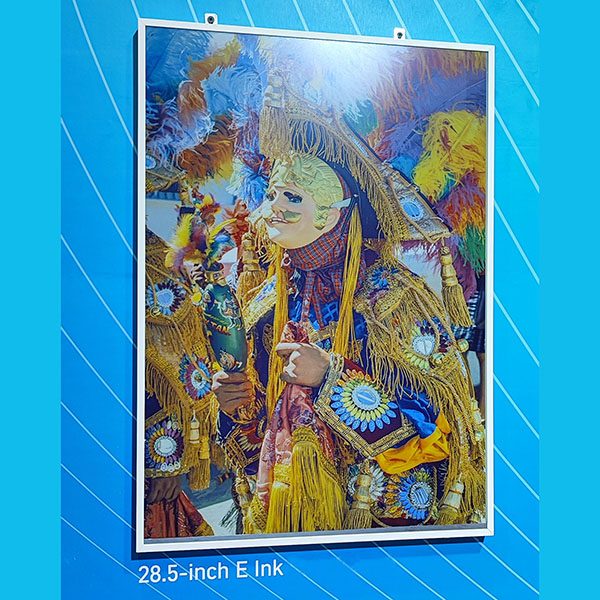
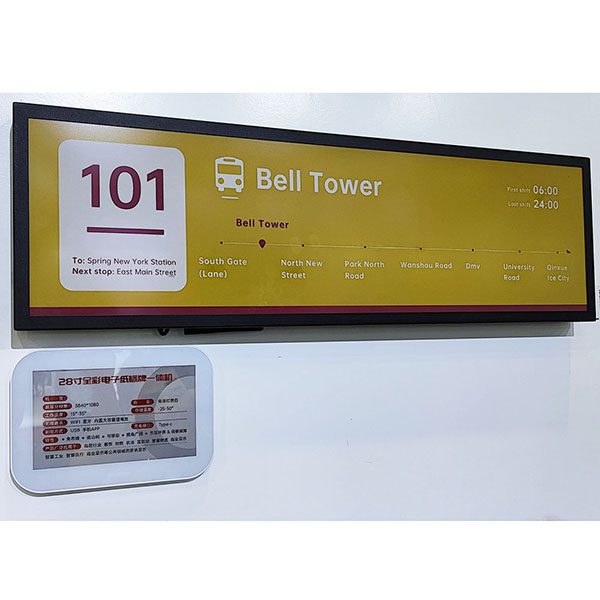
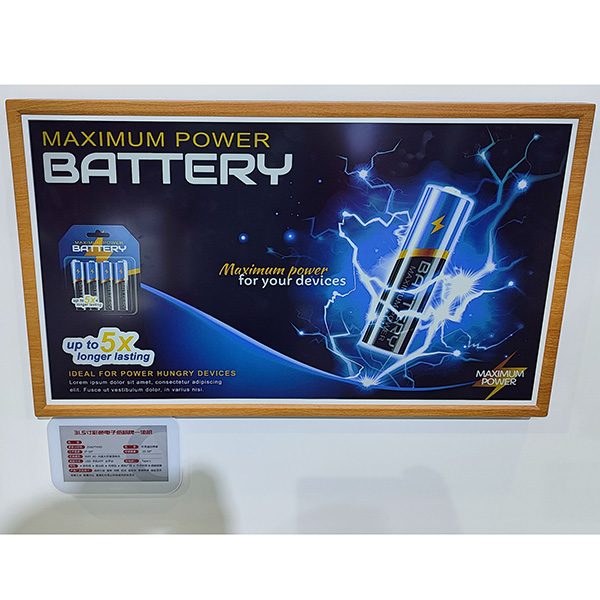
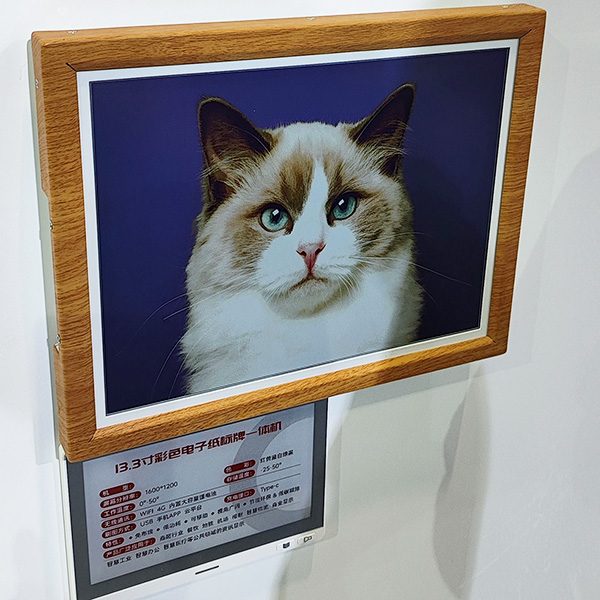
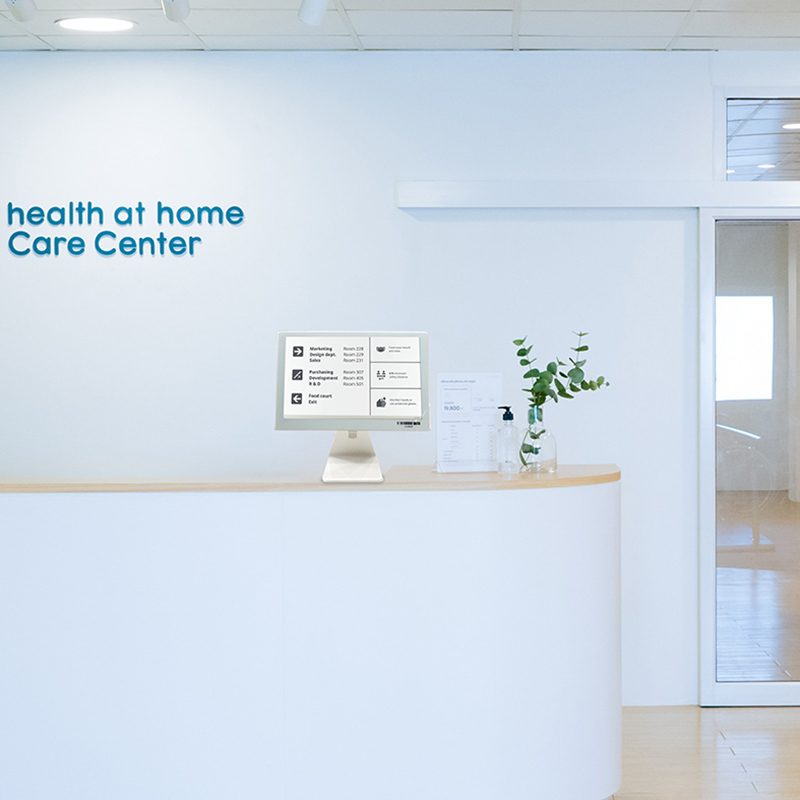
- Reception and information points — e-paper signs for opening hours, queue information and notices, changed centrally (e-paper display signage).
Product illustrations: reception sign and room schedule sign.
A note on privacy: where a sign could show patient information, keep it to what is necessary (for example a room status rather than a patient name), and run the management system on your own servers so data stays inside the facility.
Hygiene and practical considerations
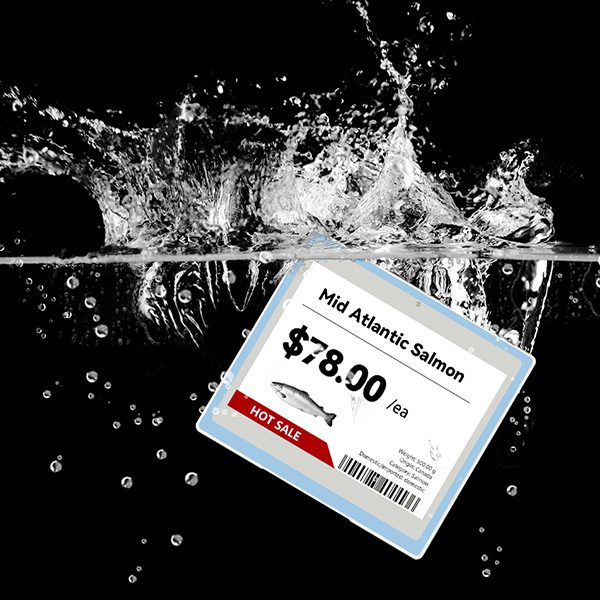
- Cleaning. Labels can be wiped with a damp cloth; for areas that are cleaned intensively, choose the 4.2" waterproof model with an IP67 housing.
- Cold storage. Standard labels work from 0 to 40 °C, which covers refrigerated medicine cabinets; freezer models are rated from −25 to +30 °C.
- No cabling. Battery-powered labels and signs can be mounted on shelves, drawers and doors without electrical work in clinical areas.
- Radio. Labels talk to ceiling-mounted base stations on 2.4 GHz over BLE 5.2 at low power; they do not use the facility’s Wi-Fi.
Label sizes for pharmacies and healthcare
| Position | Suggested size | Typical content |
|---|
| Small items, narrow shelves | 1.54" | Name, price |
| Standard pharmacy shelf rail | 2.13" | Name, strength, pack size, price, barcode |
| Promotion positions | 2.66" – 2.9" four-colour | Offer price and end date |
| Drawer fronts | 2.13" – 2.9" | Item name, price per unit or gram, barcode |
| Medicine storage locations | 2.13" – 4.2" | Item, strength, location code |
| Room and department signs | 7.5" | Room name, schedule, status |
Integration with pharmacy and hospital systems
Your pharmacy POS, ERP or inventory system sends product data — code, name, barcode, price and up to 32 custom fields such as strength, pack size or storage location — to the ESL management system through our REST API. The system renders each label from its template and sends updates through the AES-AP01 base stations. For healthcare organisations that keep data in-house, the software runs on your own server; integrators can also license the MQTT protocol to drive base stations from their own platform.
Planogram changes and seasonal ranges
Pharmacies reset shelves more often than many shoppers realise: cold and flu remedies come forward in winter, sun care and allergy products in spring, and supplier promotions rotate monthly. With paper tags, every reset means printing and moving dozens of tags and checking that each one sits under the right product. With electronic labels, the label stays on the rail and is simply rebound to its new product in the system — staff scan the label’s barcode and the product’s barcode, and the label redraws itself with the new name and price.
This also makes it practical to label products that move between positions frequently, such as promotional stands and counter displays, without accumulating out-of-date tags.
Template examples for pharmacy labels
- Standard OTC label: brand and product name, strength and pack size on the second line, price, unit price where required, and a barcode.
- Promotion label: offer price highlighted in red, regular price, and the offer end date.
- Advice label: a short note such as “Ask the pharmacist” for products that need advice before sale.
- Drawer label: item name in large type, price per gram or per unit, and a barcode for restocking.
- Storage label: item, strength, location code and minimum stock level for hospital pharmacy shelving.
Keep the name and price large; pharmacy customers often read labels while comparing two similar boxes, and older customers need clear type.
What drives the cost of a pharmacy ESL project
The budget depends on the number of label positions and their sizes, the number of base stations (store size and layout), mounting accessories for shelves, drawers and cabinets, the software licence and the integration with your pharmacy system. Drawer walls need one label per drawer, so count drawers as well as shelf positions. We quote per project after reviewing your position count and layout.
Planning a pharmacy rollout
- Count label positions by fixture: shelf rails, drawers, hooks, refrigerated cabinets.
- Clean the product data: names, strengths, pack sizes and prices as they should appear on the shelf.
- Pilot one store or one drawer wall with an ESL demo kit.
- Connect the POS or ERP and agree the label templates.
- Install base stations and labels section by section while the pharmacy stays open.
- Train staff to bind products after planogram changes and replace batteries when the system flags a label.
FAQ
Are electronic shelf labels suitable for pharmacies?
Yes. They keep shelf prices identical to the till, show strength and pack size clearly on each position, and remove manual relabelling after price changes and planogram resets.
Can electronic labels be used on medicine drawers?
Yes. Labels mount on drawer fronts and show the item name, price per unit or gram and a barcode, as in Chinese-medicine dispensaries and medical supply rooms.
Can the labels be cleaned and disinfected?
They can be wiped down; for intensive cleaning or wet areas choose the waterproof model with an IP67 housing.
Does the system store patient data?
It stores what you send to it. For room signs, show only what is necessary, and run the software on your own servers so data stays inside your organisation.
Do the labels interfere with medical equipment?
Labels and base stations use low-power 2.4 GHz radio over BLE 5.2 and carry CE-RED certification. Follow your facility’s rules for radio devices in clinical areas, as you would for any Bluetooth equipment.
Planning labels for pharmacies or a dispensary? Send us the number of positions by fixture type — shelves, drawers, cabinets — and we will propose sizes, mounting and a pilot, or start with an
ESL demo kit.