
I. The Explosion of AI Agents: What the OpenClaw Phenomenon Signifies
The viral success of OpenClaw in early 2026 on GitHub is a landmark in the evolution of AI from "conversational" to "executional."
1. Closing the Loop: From Inference to Execution
In the past decade, AI was "advisory" (producing an Excel report or a dashboard). AI Agents driven by the OpenClaw framework are "action-oriented."
Physical Intervention: OpenClaw provides a unified execution interface, allowing AI to directly control ESLs (price changes), POS systems (modifying promotion entries), and even robotics (restocking).
Autonomous Decision Logic: This represents the prototype of "Autonomous Store Operations." AI no longer asks a manager, "Should we discount this?" Instead, it analyzes inventory turnover and competitive environments to autonomously push price updates across the store via OpenClaw.
2. Industry Foreshadowing: The "Materialization" of Software Agents
The explosion of OpenClaw proves that pure SaaS dashboards have lost their competitive moat. The industry now demands agents capable of "Physical State Change." This explains why Hanshow (possessing the physical touchpoints) had to acquire Harb Data Technology (possessing the decisional brain).
1). The Industry Pioneer & Benchmark: Dunnhumby (UK)
Status: Known as the global "Godfather" of retail data science. They were the first to prove the monumental value of data by creating the Clubcard for Tesco.
Current State (2026): Transitioning from a "Consulting + Software" model toward a total evolution into "Agentic AI."
Key Developments: In early 2026, they launched an AI Innovation Forum for retailers, focusing on leveraging Generative AI to automate Category Management. Currently, they are highly productized—not only serving retailers but also capturing massive marketing budgets from CPG giants (e.g., P&G, Unilever) through closed-loop data ecosystems.
2). The Vertical AI Giant: SymphonyAI (US)
Status: The strongest international peer to the "Retail Brain" concept. They specialize in Vertical AI, tailoring algorithms specifically for retail and finance.
Current State (2026): At the peak of market momentum. During NRF 2026, they unveiled CINDE Merchandising Agents.
Key Highlights: These AI Agents function like human category managers—automatically identifying margin leaks, optimizing promotional budgets, and suggesting product delisting/replacements on a weekly basis. Their deep integration with Asia’s DFI Retail Group (Dairy Farm) proves that this "autonomous decision-making" model is highly effective in the Asian market.
3). Pricing & Promotion Specialists: Revionics (US)
Status: Laser-focused on Price Optimization. While others offer all-in-one solutions, Revionics is the "Sniper" of the pricing domain.
Current State (2026): Now acquired by a logistics software giant. They are currently utilizing Generative AI + Predictive Modeling to solve dynamic pricing challenges in high-inflation environments.
The Trend: Their algorithms are now directly intervening in front-end execution. This aligns perfectly with the logic behind Hanshow’s acquisition of Habu: Algorithms directly commanding price changes on electronic shelf labels (ESL).
II. The Arms Race of Global ESL Giants: From E-Ink to Edge Computing
1. Current State: Labels as Edge Servers
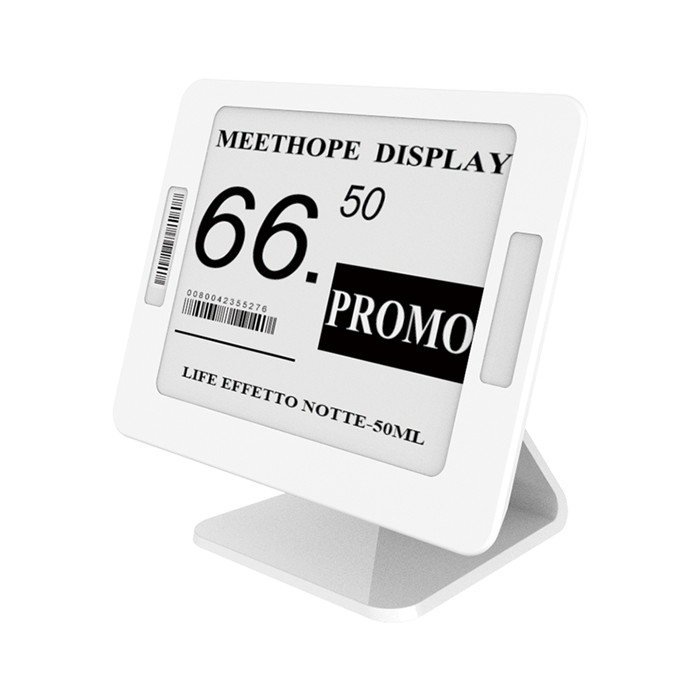
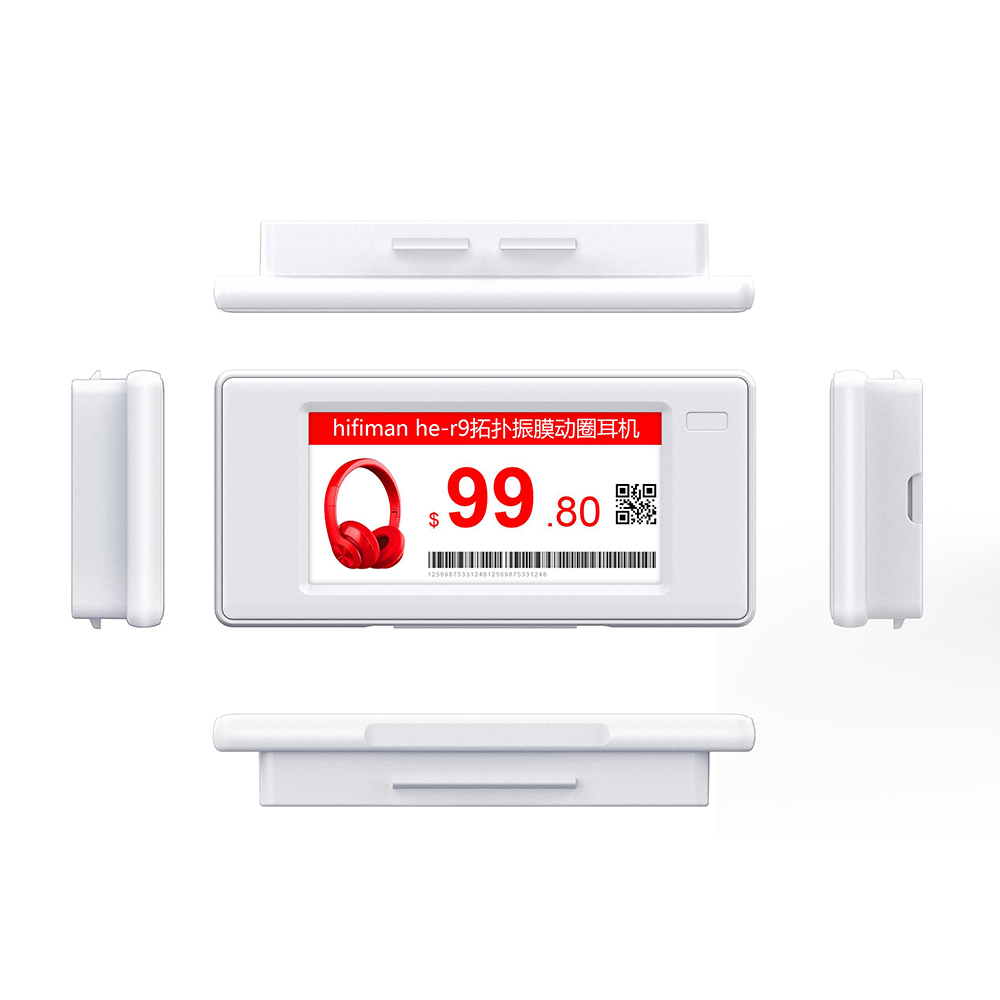
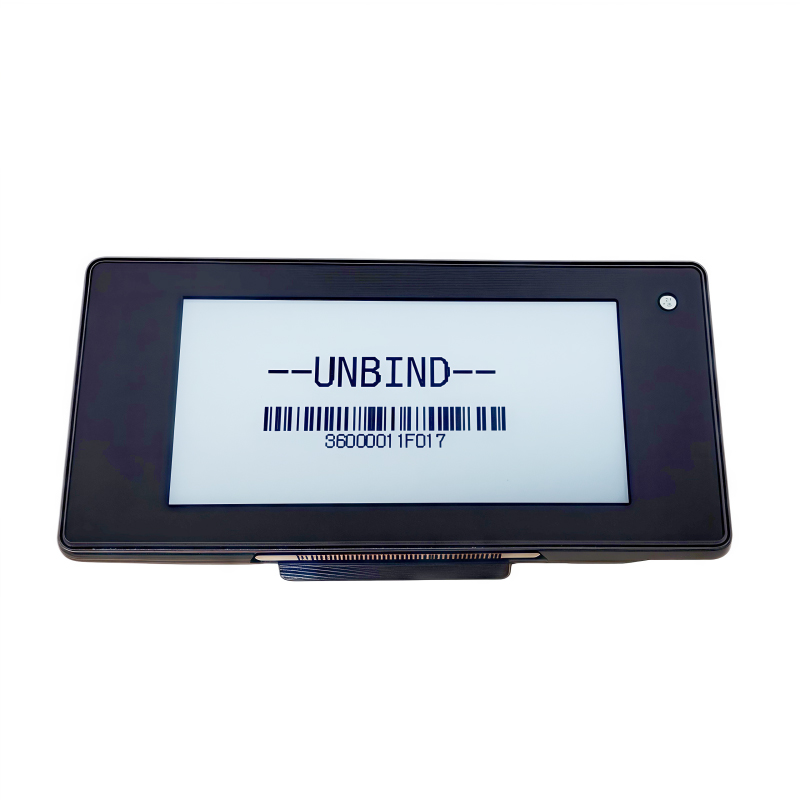
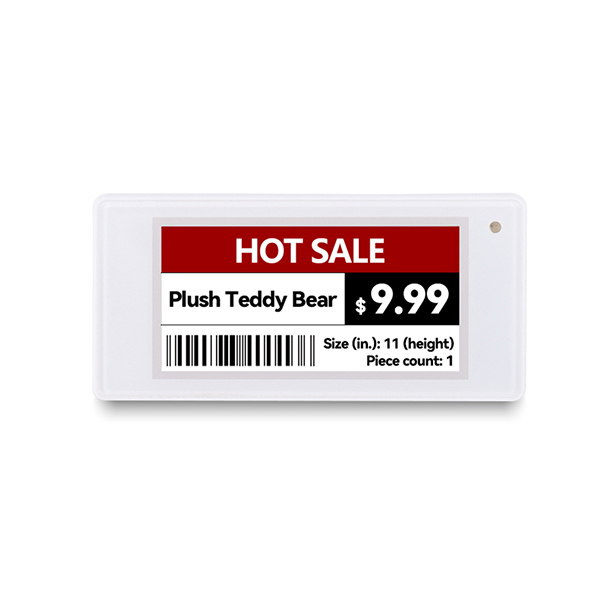
By 2026, global ESL leaders (VusionGroup, Hanshow, Pricer) have moved beyond simple hardware. ESLs are no longer just price tags; they are the edge servers of the store.
VusionGroup (formerly SES-imagotag): Focusing on "Visual AI." By integrating computer vision (CV), their systems automatically detect out-of-stock items.
Pricer: Prioritizing optical communication and high-frequency response to provide sub-second updates for extreme dynamic pricing.
Hanshow: Moving toward a "Cloud-Edge Synergy + Algorithmic Empowerment" route.
| Company | Core hardware | Software/AI Actions (2025-2026) | logic |
| VusionGroup (formerly SES) | ESL | Deep integration of Memory (a retail data company) and computer vision technology | Creating a closed loop of "perception + decision-making" |
| Pricer (Sweden) | ESL | Launched the Pricer Avenue platform and partnered extensively with AI vision company Focal Systems. | Solving shelf shortages and dynamic pricing |
| Hanshow | ESL | Acquisition of Habu Data | Complete the algorithmic brain to achieve a higher level of decision-making, moving from "display" to "decision-making". |
2. Data and AI Strategic Maneuvers
Giants are shifting from hardware sales to RaaS (Retail as a Service). They are embedding Neural Processing Units (NPUs) into base stations, enabling them to process real-time traffic data locally rather than relying entirely on cloud backhaul.
III. The Paradigm Shift in Retail Data Science: From BI to AD (Autonomous Decision)
In the previous era, retail data science focused on "explaining the past." Now, it is focused on "taking over the future."
1. The End of Predictive Models, the Rise of Generative Decisioning
Traditional Random Forest or Time-Series models are being replaced by Generative Business Models (GBM). These models don't just output a predicted number; they generate tens of thousands of promotion scenarios, run self-simulations, and select the optimal path.
2. Global Status: Forced Demolition of Data Silos
With the push for the Digital Product Passport (DPP) in the EU and rapid retail digitization in the Middle East, retailers realize that data must be standardized. Companies like Harb Data Technology, which specialize in cleaning messy, heterogeneous data, have become the "refineries" that turn raw data into high-quality fuel for AI consumption.
IV. The Final Battle: Fusion of Hardware Companies and SaaS Software
The Hanshow-Harb Data Technology merger is a marriage of "Heavy Assets" and "Light Assets," solving two critical pain points:
The "Execution Anxiety" of SaaS: Previously, Harb Data Technology could calculate the best price, but it couldn't control whether the retailer actually implemented it.
The "Value Trap" of Hardware: Hanshow used to earn one-time revenue from selling labels. Now, through Harb Data Technology’s algorithms, they can charge based on "Gross Profit Lift" or performance-based SaaS fees.
This fusion signals that there will be no pure hardware companies in the future—only AI companies with physical touchpoints.
V. The Infrastructure: Google UCP and MCP Integration
The combination of Google’s UCP and MCP is bringing retail tech into a "Plug-and-Play" era.
1. UCP (Universal Commerce Protocol): The TCP/IP of Retail
Google’s logic for UCP is to flatten the protocol gap between brands.
The Opportunity for Middleware: In a UCP architecture, multi-brand compatibility is no longer a "translation job" but a "standard access." UCP defines the standard semantics for products, prices, and locations.
Decoupling: UCP allows a retailer to use Hanshow labels at the bottom, Harb Data Technology algorithms at the top, and flow data through Google’s standard protocol in between.
2. MCP (Model Context Protocol) and AI Agent Deep Integration
The MCP protocol solves the problem of AI Agents being "blind" to underlying data.
Real-time Context: Through MCP, an AI Agent (like a Gemini Retail Assistant) can access real-time POS transaction streams and RTLS location data.
Low-code Calls: Developers no longer need to write custom interfaces for every brand. They simply register resources in an MCP host, and the AI automatically recognizes and operates multi-brand ESL terminals.
UCP: The "HTTP for Agentic Commerce" – A Deep Dive into Multi-Terminal Synergy
The Universal Commerce Protocol (UCP), officially launched by Google at NRF 2026, is being hailed as the "HTTP for Agentic Commerce." It is far more than a simple API standard; it is the foundational language designed to allow AI Agents to participate directly in commercial transactions.
For a data middleware like AES ESignHub—which bridges multi-brand hardware—UCP provides a globally standardized "output port," turning fragmented hardware data into actionable AI intelligence.
1. Core Positioning: From "Browsing Pages" to "Querying Data"
Traditional retail protocols (like legacy EDI or proprietary POS interfaces) were built for system-to-system sync. UCP is built specifically for AI Agents.
Standardized Semantics: UCP defines a universal logic for attributes, including Real-time Availability, Loyalty-based Dynamic Pricing, and RTLS (Real-Time Location System) Coordinates.
Three Integration Modes:
Direct API: For standard e-commerce platforms.
Agent2Agent (A2A): Allowing a retailer’s "Brand Agent" to negotiate directly with a consumer’s "Personal Agent."
MCP (Model Context Protocol) Integration: The most critical piece. Through an MCP host, LLMs (like Gemini) can directly query backend data—such as the status of an Electronic Shelf Label (ESL) within ESignHub.
2. Bridging ESL, POS, and RTLS: Achieving Software-Hardware Unity
Under the UCP architecture, data from various terminals are no longer silos but are abstracted into a "Unified Commerce Context":
POS + UCP: Converts real-time transaction flows into "Sales Velocity Trends" that AI can comprehend.
RTLS + UCP: Solves the "Last Meter" delivery. An AI Agent doesn't just know an item is in stock; it retrieves the precise indoor coordinates via UCP.
ESL + UCP: The ultimate feedback loop. UCP includes an "Execution Instruction Set." When an AI Agent suggests a price drop based on POS data, it sends the command via UCP. Middleware like ESionHub receives this and broadcasts it via MQTT to various third-party base stations and labels.
3. Data Middleware Architecture under UCP
If you adapt your project to UCP, the architecture evolves as follows:
| Layer | Component | Role |
| Perception & Execution | Multi-brand ESL, POS, RTLS | The physical touchpoints (Hardware Layer). |
| Protocol Adaptation | AES ESignHub (Middleware) | Normalizes proprietary protocols (e.g., Brand A's Bluetooth, Brand B's Zigbee). |
| UCP Gateway | UCP Wrapper / MCP Host | The Key Addition: Wraps middleware data into UCP-compliant "Commerce Objects." |
| Intelligent Decision | Google Gemini / Retail AI Agents | Reads data and issues commands directly via UCP. |
4. Why is this a Game-Changer for "Multi-Brand" Middleware?
Historically, small hardware vendors struggled to enter large retail chains due to high integration costs.
Neutralizing Brand Differences: As long as your middleware supports UCP output, retailers no longer care if the underlying hardware is Hanshow, SoluM, or others. They only care if the UCP interface is functional.
Real-time Closed Loops: UCP mandates sub-second status updates. This aligns perfectly with your goal of "millisecond-level price updates."
Commercial Opportunity: As Google pushes UCP in 2026, retailers will demand "UCP-Ready" compliance. ESignHub can act as the "UCP Gateway" for hardware vendors who lack their own sophisticated software stacks.
5. Essential Tech: MCP (Model Context Protocol)
In the UCP ecosystem, MCP is the tool for data accessibility. It allows you to run a local server that securely exposes your Linux-based databases (like MQTT messages in EMQX) to AI models. The AI can query specific data—like "ESL battery level" or "Current Displayed Price"—without needing full database permissions.
Conclusion: Impacts and Revelations
1. Impact on Industry Practitioners: From "Maintenance" to "Prompt Engineering"
Skill Reconfiguration: Traditional hardware installers and basic data analysts will be phased out.
New Roles: The industry will demand "Business Agent Architects" who understand how to translate business logic into execution flows under the OpenClaw protocol.
2. Impact on SaaS Software Companies: Execute or Perish
Deep Verticalization: Generic BI SaaS will lose its survival space.
Convergence with Execution: Software companies must integrate downward (via UCP/MQTT into hardware) or fuse upward (into hardware giant ecosystems). Otherwise, they will become "cold data warehouses" in the AI era.
3. Impact on AI Agent Applications: Physicality and Feedback Loops
Physical Presence: AI Agents will gain "bodies" through ESLs and RTLS.
Closed-Loop Efficiency: The cycle of "Decision-Execution-Feedback-Optimization" will shrink from days to seconds.
The Value of Middleware: For high-performance, multi-brand middleware, the UCP standardization wave makes such "protocol routers" the essential neural system for a "Retail Brain" that is not locked into a single brand.
