
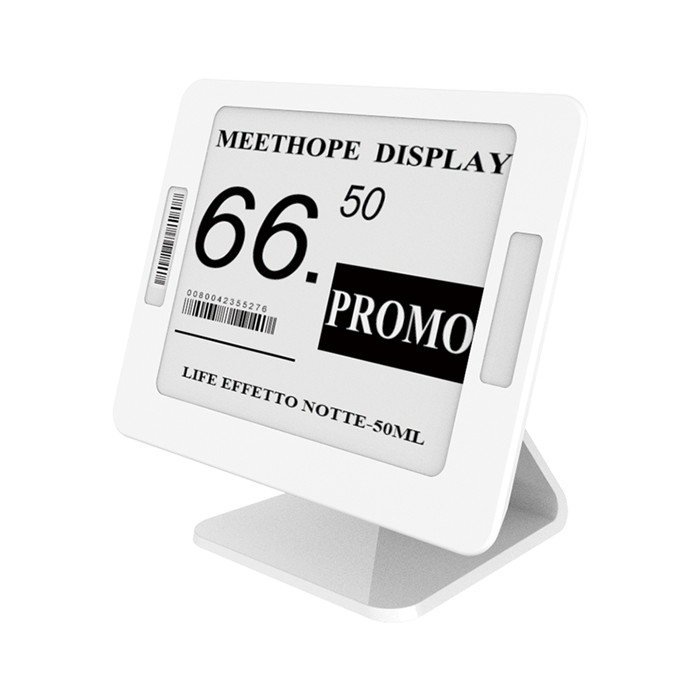
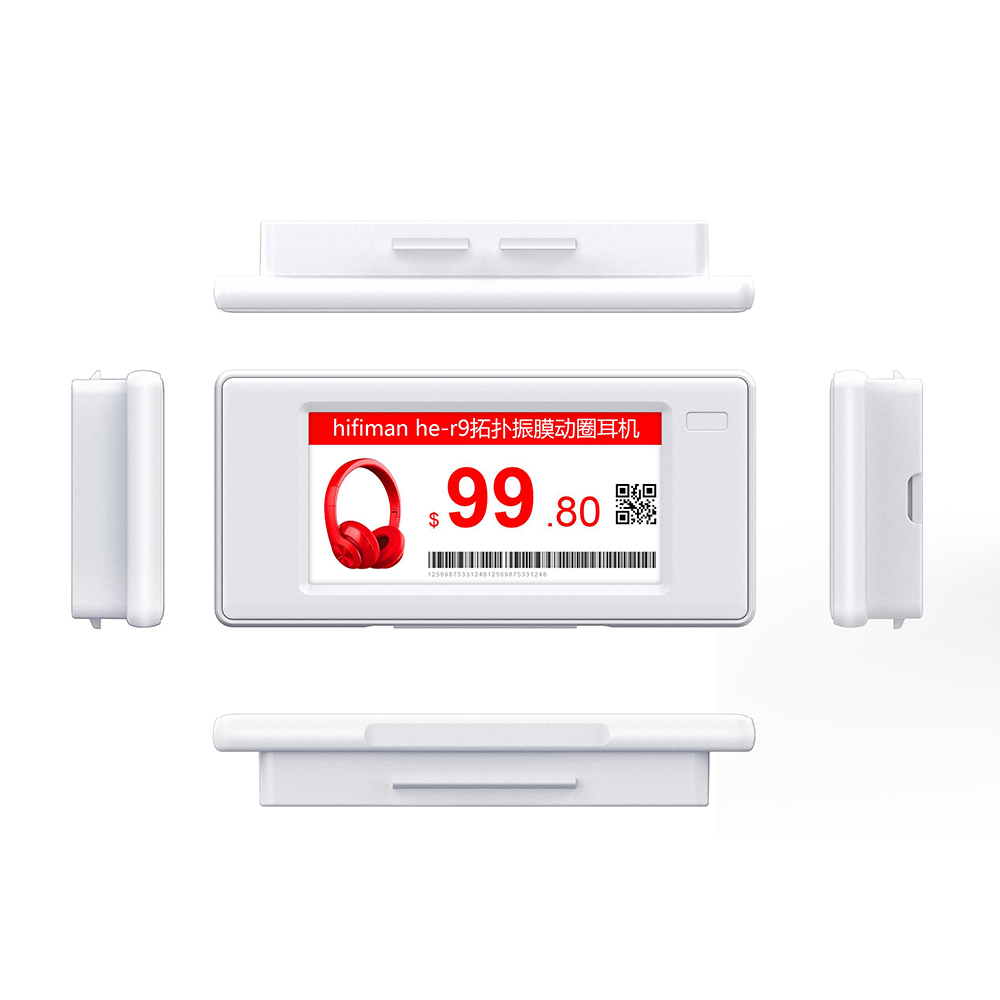
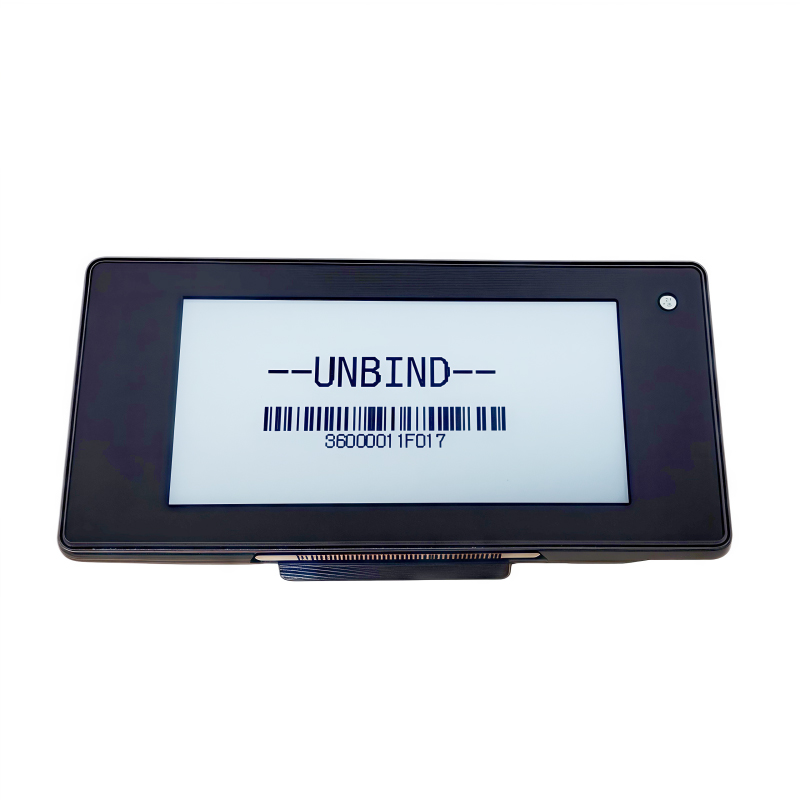
Electronic shelf labels (ESL) are small, battery-powered e-paper displays that show prices on store shelves and update automatically from central pricing software, replacing paper price tags. A complete ESL system contains three parts: the label hardware, a wireless ESL gateway, and management software. The guide below explains how electronic shelf labels work, what the labels cost in 2026, and how retailers can choose the right system.
What Are Electronic Shelf Labels?
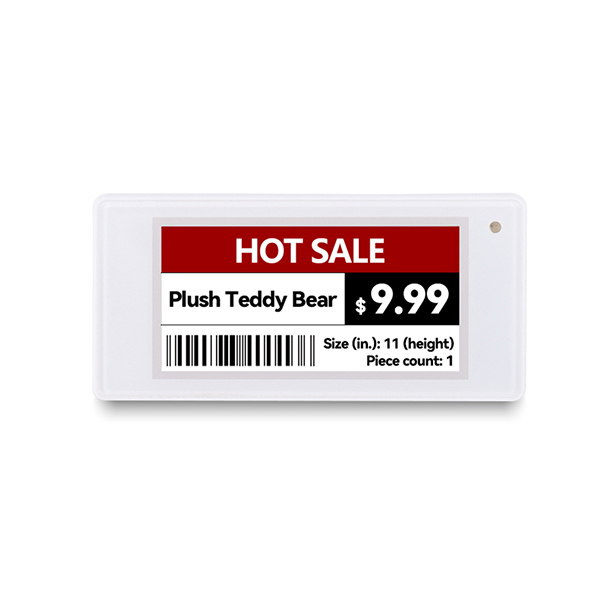
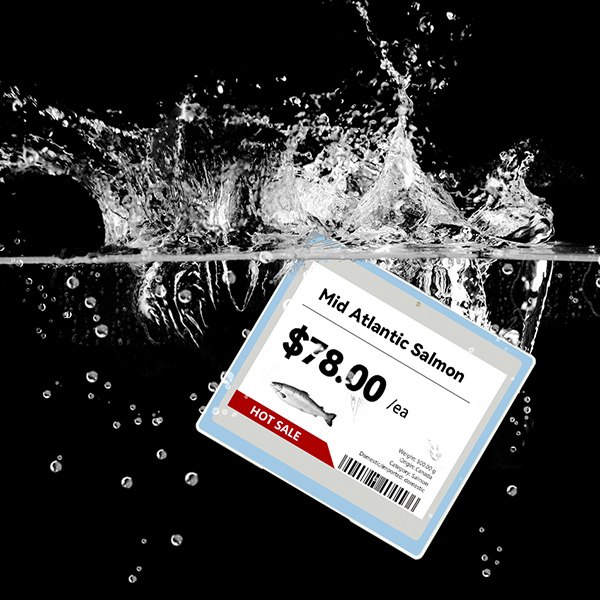
Electronic shelf labels are digital price tags mounted on the shelf edge. Each label uses an e-paper (e-ink) screen that looks like printed paper, stays readable under store lighting, and consumes power only when the price changes. Because of the low power draw, one coin-cell battery can run one label for 5 to 10 years.
Retailers connect every label to a central server through a wireless gateway. When staff change a price in the back office, the new price appears on every connected shelf edge within seconds. The synchronization removes the gap between shelf price and checkout price, a gap that causes customer complaints and, in some U.S. states, regulatory fines.
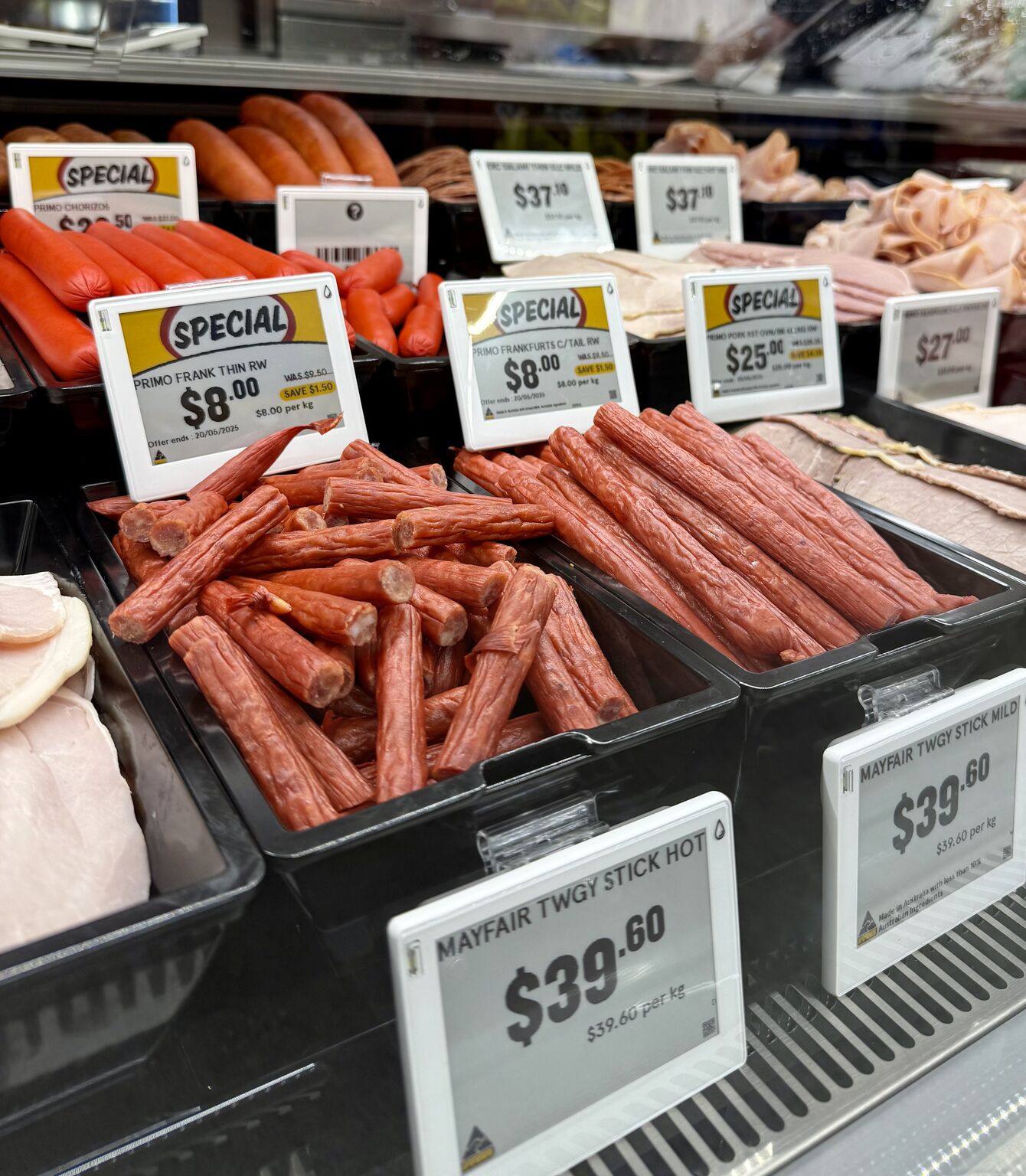
Photo: AiEInkSmart ESL price tags deployed in a supermarket. (AiEInkSmart customer project)
How Do Electronic Shelf Labels Work?
Electronic shelf labels receive price data wirelessly from a gateway, refresh the e-paper screen in seconds, and then hold the image with zero power. The workflow has four steps:
Step 1 – Data input: An operator updates prices in the ESL management software, or the software pulls prices from the store POS/ERP system automatically.
Step 2 – Transmission: The software sends the update to a 2.4G gateway or 433MHz gateway installed on the ceiling. One gateway typically covers 20,000+ labels.
Step 3 – Display refresh: Each label wakes up, receives the new data, refreshes the screen, and sends a confirmation back.
Step 4 – Deep sleep: The label returns to sleep mode. The bistable e-paper screen holds the image without any electricity.
Developers can also integrate the labels through MQTT or REST API. AiEInkSmart publishes full MQTT gateway documentation, so system integrators can connect the labels to any retail middleware.
What Types of Electronic Shelf Labels Can You Buy?
Electronic shelf labels come in five main display types: white, black, tri-color, four-color, and full color, with screen sizes from 1.54 to 13.3 inches. The table below compares each type:
| Type | Colors | Best For | Product Page |
|---|---|---|---|
| White series | Black on white | Standard grocery pricing | White electronic shelf label |
| Black series | White on black | Electronics, fashion stores | Black electronic shelf label |
| Tri-color series | Black / white / red or yellow | Promotions and discounts | Tri-color series |
| Four-color series | Black / white / red / yellow | Complex promotion rules | Four-color series |
| Full-color series | Spectra 6 full color | Brand displays, premium retail | Full-color series |
| Low-temperature series | Black / white | Freezers down to -25℃ | Low-temperature series |
Source: AiEInkSmart product catalog, 2026.
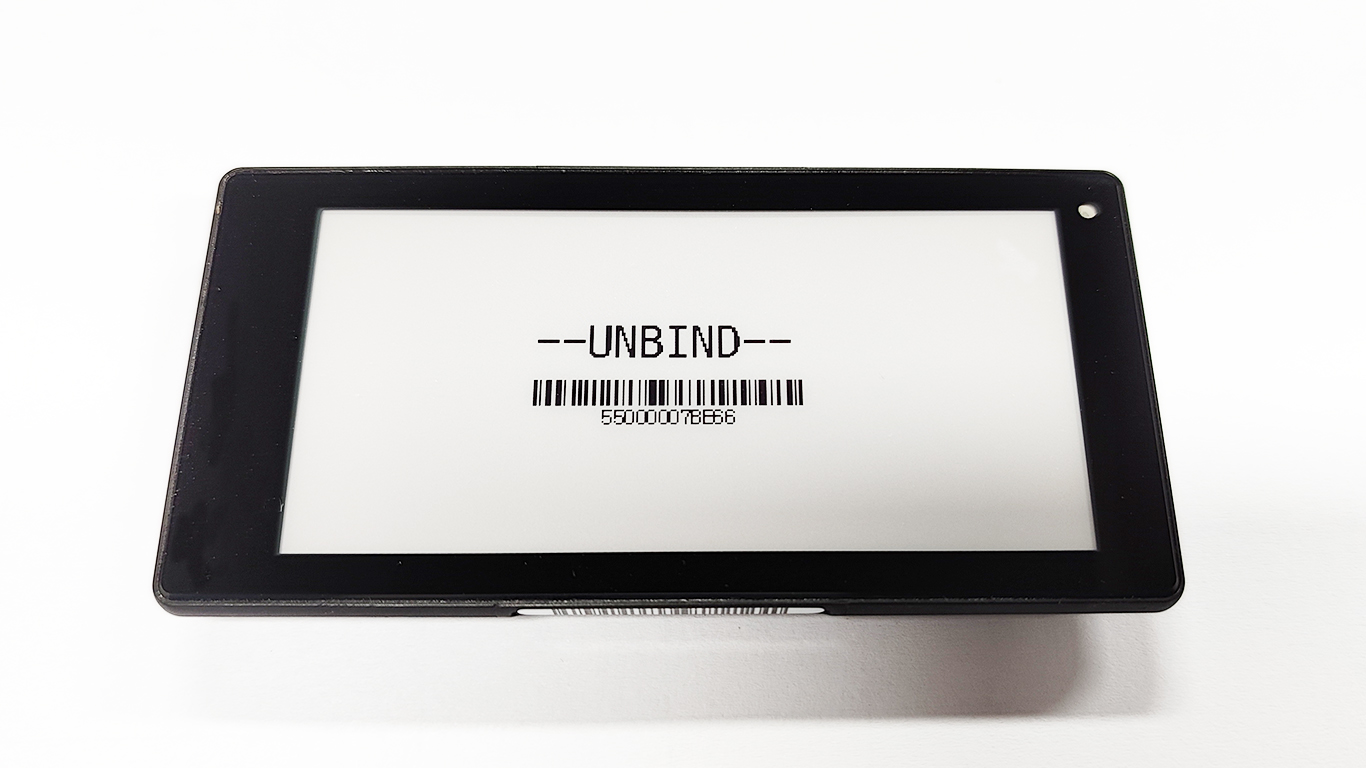
Photo: AiEInkSmart tri-color and four-color ESL price tags, 1.54–13.3 inch.
How Much Do Electronic Shelf Labels Cost in 2026?
Most electronic shelf labels cost between US$5 and US$20 per label in 2026, and a complete system for a mid-size store usually pays back within about two years. Label size, color count, and order quantity drive the final price.
| Cost Item | Typical Range | Notes |
|---|---|---|
| Labels (1.54"–2.9") | $5–$10 each | Highest volume sizes in grocery |
| Labels (4.2"–13.3") | $12–$50 each | Larger screens, full-color cost more |
| Gateway / AP | $100–$300 each | One gateway per ~20,000 labels |
| Software | Free–$500+ setup | AiEInkSmart includes the management system |
| Accessories | $0.1–$1 per position | Rails, clips, stands, hangers |
Source: AiEInkSmart 2026 quotation data; industry pricing guides (KORONA POS, 2026).
Exact pricing depends on quantity and display type. Buyers can request a current price list on the contact page, or start with an ESL demo kit to test the full system before a rollout.
Why Are Retailers Switching to Digital Shelf Labels?
Retailers adopt electronic shelf labels to cut labor costs, remove pricing errors, and run dynamic pricing. The global market data shows how fast adoption is moving:
| Indicator | Figure | Source |
|---|---|---|
| Market size, 2024 | US$1.85 billion | Grand View Research |
| Forecast, 2033 | US$7.54 billion | Grand View Research |
| CAGR 2026–2033 | 17.4% | Grand View Research |
| Walmart rollout | Digital shelf labels expanding to all U.S. stores | Walmart corporate news, Retail Dive |
Source: Grand View Research, Electronic Shelf Label Market Report; Walmart corporate news.
A typical store spends 5–10 staff hours per week changing paper tags. Digital tags remove that manual work, and stores report labor savings of dozens of hours per week after installation. Supermarkets also use the labels to automate markdowns on short-dated food, which cuts waste.
Which Communication Technology Should You Choose?
2.4GHz is the mainstream choice for supermarkets, 433MHz suits large or interference-heavy sites, and NFC fits small shops without a network.
| Technology | Strength | Typical Use |
|---|---|---|
| 2.4GHz private protocol | Fast updates, 20,000+ labels per gateway | Supermarkets, chain stores |
| 433MHz | Long range, strong penetration | Warehouses, big-box stores |
| Bluetooth (BLE) | Phone-based configuration | Small formats, pilots |
| NFC | No gateway needed, tap to update | Boutiques, price checks |
Source: AiEInkSmart engineering documentation; Wikipedia, Electronic shelf label.
How to Choose an Electronic Shelf Label Supplier
Buyers comparing ESL suppliers should check five points:
Factory capability. AiEInkSmart, the ESL brand of PanPanTech, runs an ISO 9001 certified plant with SMT production lines and automated module testing in Guangzhou, China.
Deployment record. PanPanTech systems run in 6,000+ stores across 30+ countries.
Open integration. Ask for MQTT and REST API documentation before purchase. Closed systems lock stores into one vendor.
Battery life claims. Request the test report. AiEInkSmart labels reach up to 7 years under standard update frequency.
Accessories ecosystem. Rails, clips, stands and hangers decide how fast installation goes. Browse the ESL price tag accessories range.

Photo: SMT production line at the AiEInkSmart factory, Guangzhou.
FAQ About Electronic Shelf Labels
How long do electronic shelf labels last?
Standard labels run 5–7 years on one battery; the e-paper screen itself lasts longer. Update frequency and temperature affect real battery life.
Do electronic shelf labels need Wi-Fi?
No. The labels use a dedicated gateway on 2.4GHz or 433MHz, separate from the store Wi-Fi network, so price updates never compete with customer traffic.
Can the labels work in freezers?
Yes. Low-temperature models operate down to -25℃ and are designed for frozen-food cabinets and cold storage.
What happens when the battery dies?
The e-paper screen keeps showing the last price because the display is bistable. The management software flags the low-battery label so staff can replace the battery in advance.
Can a small store afford an ESL system?
Yes. A small store can start with a demo kit and a few hundred labels at US$5–10 per label, then expand shelf by shelf. Request a quotation through the AiEInkSmart contact page.
About the author: Panda Wang is co-founder of PanPanTech (AiEInkSmart), an electronic shelf label manufacturer serving 6,000+ stores in 30+ countries. Published July 2026.
